Permanent Replacement Teeth That Look and Feel Natural
Missing teeth affect how you chew, speak, and smile. Unlike removable dentures, dental implants are anchored in the jawbone and give you permanent new teeth that restore both function and appearance. At Marc P Stanard DDS, PC in Washington, DC , implants are placed with the training of a periodontist who focuses on the gums and bone that support them, giving your new teeth a strong, healthy foundation that can last for many years.
request an appointmentWhat Is a Dental Implant?
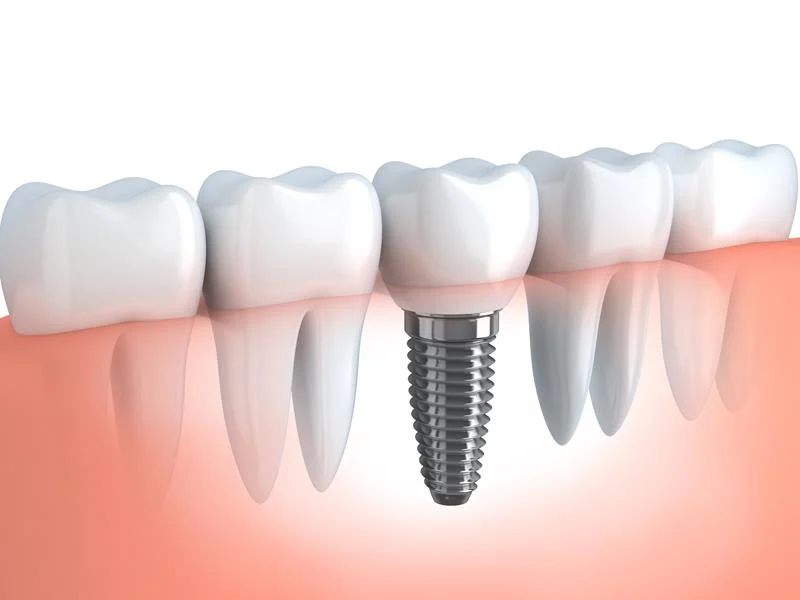
A dental implant is a small, biocompatible post placed in the jawbone where a natural tooth root used to be. Over the following months, the bone bonds with the implant in a process called osseointegration. Once that bond is secure, a connector called an abutment is attached, and a custom crown, bridge, or denture is placed on top. The result is a replacement tooth that is stable, comfortable, and designed to blend in with your natural smile.
Implants can replace a single tooth, several teeth in a row, or a full arch. Because they are fixed in place, there is no slipping, no adhesive, and no need to remove them at night the way you would with traditional dentures.
Benefits of Choosing Dental Implants
- Natural look and feel that matches your surrounding teeth
- Comfortable chewing and clear speech without loose appliances
- Helps preserve jawbone, which tends to shrink after a tooth is lost
- No need to reshape healthy neighboring teeth, as a traditional bridge requires
- Long-lasting results with proper home care and regular checkups
- Restored confidence when you smile, eat, and talk
Are You a Good Candidate?
Most adults who are missing one or more teeth can be considered for implants. The most important factors are healthy gums and enough jawbone to support the post. Because Dr. Stanard specializes in periodontics, he evaluates gum health and bone volume closely before recommending treatment. If gum disease is present, it is treated first so the implant has a healthy environment to heal in.
If bone has thinned since a tooth was lost, a ridge augmentation procedure can rebuild the area so an implant can be placed securely. When a damaged tooth still needs to come out, a careful tooth extraction can be planned with the future implant in mind.
The Dental Implant Process
- Consultation and planning: We review your health history, examine your gums and bite, and take imaging to measure bone height and width.
- Preparing the site: If needed, extractions, gum treatment, or bone grafting are completed first.
- Implant placement: The implant post is placed in the jawbone under local anesthesia.
- Healing: The bone grows around the implant over several months, creating a stable anchor.
- Restoration: An abutment is attached, and your crown, bridge, or denture is completed, often in coordination with your general dentist.
Caring for Your Implants
Implants cannot get cavities, but the gums and bone around them can become inflamed, much like gum disease around natural teeth. Brushing twice a day, cleaning between teeth daily, and keeping up with professional cleanings and exams help protect your investment. We will show you the best tools and techniques for keeping your implants and the surrounding tissue healthy.
Dental Implant FAQs
How long do dental implants last?
With good oral hygiene and regular dental visits, the implant post can last for decades and often a lifetime. The crown on top may eventually need replacement due to normal wear.
Does getting a dental implant hurt?
Implant placement is done under local anesthesia, so most patients feel pressure rather than pain during the procedure. Mild soreness afterward is common and is usually managed with over-the-counter pain relievers and rest.
How long does the whole implant process take?
The timeline depends on your situation. Healing after placement typically takes a few months, and additional time may be needed if an extraction or bone grafting is done first. We will give you a personalized timeline at your consultation.
What if I do not have enough jawbone for an implant?
Bone loss is common after a tooth has been missing for some time. Bone grafting or ridge augmentation can rebuild the area so an implant can be placed securely.
Can dental implants replace all of my teeth?
Yes. Implants can support a full-arch bridge or an implant-retained denture, which is far more stable than a traditional removable denture.
Why see a periodontist for dental implants?
A periodontist has advanced training in the gums and bone that support teeth and implants. That expertise helps with site preparation, precise placement, and long-term health of the tissue around your implant.
How do I care for my implants?
Brush twice daily, clean between teeth and around implants every day, avoid tobacco, and keep up with routine cleanings and exams so any gum inflammation can be caught early.
Take the First Step Toward a Complete Smile
If missing teeth are holding you back, a dental implant consultation is the best way to learn your options. Call Marc P Stanard DDS, PC at (202) 887-5441 or request an appointment online to visit our office in Washington, DC .